Feb 20, 2023


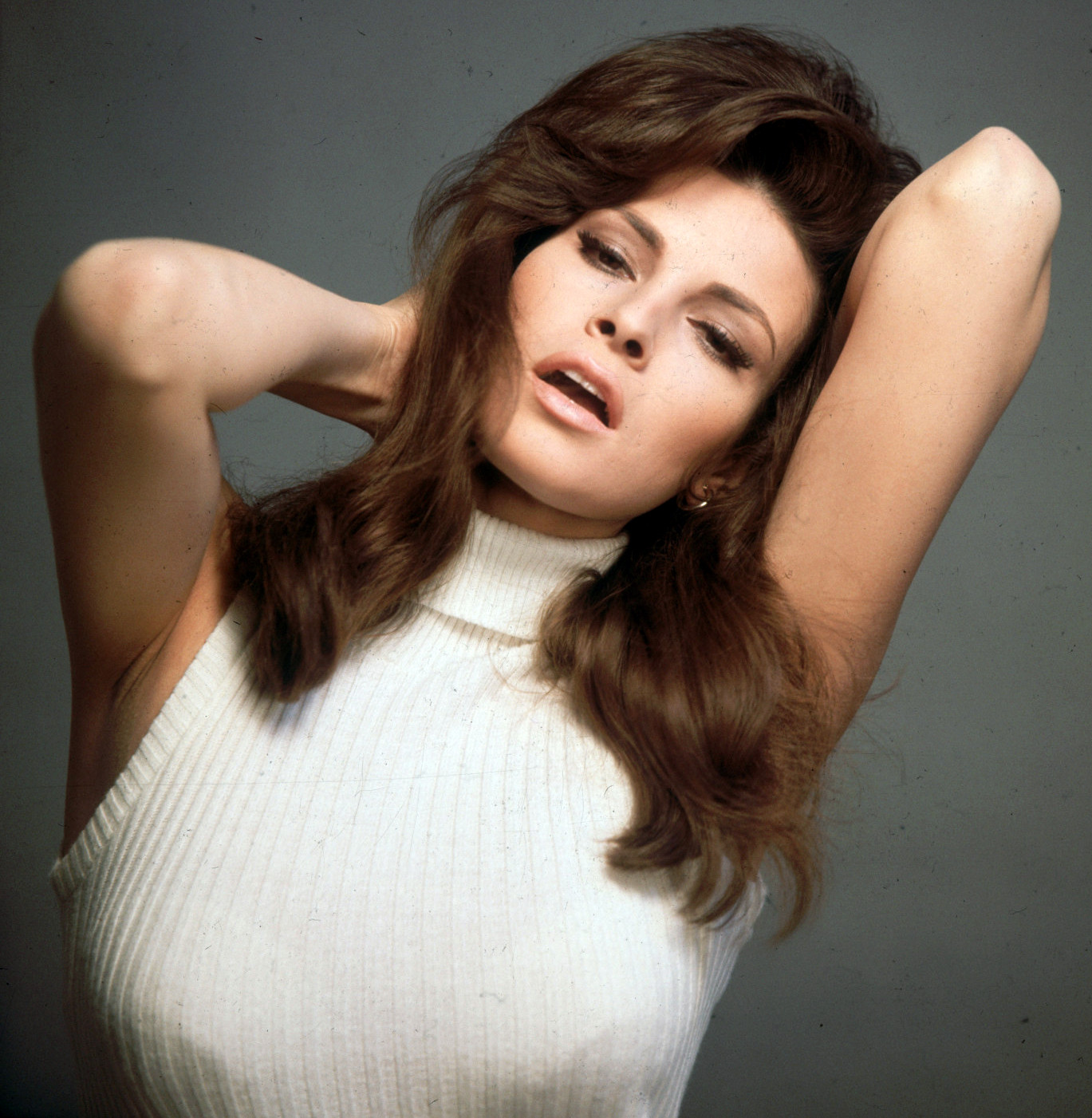
A MONTH AFTER GINA LOLLOBRIGIDA, ANOTHER FAMOUS BIKINI GIRL, RAQUEL WELCH, PASSED AWAY.


By 1966, bikini was becoming increasingly popular, especially among young women, in Western countries.  This two-piece bathing suit was not the very minimalist one that had caused a scandal on the almost totally naked body of stripper Micheline Bernardini, in Paris, on July 5, 1946.  This was shortly after the creation of the tiny bikini by the French engineer Louis Réard.

In the early 1950s, only pin-up girls (or a few other women who sometimes received police fines for indecency on public beaches) most of them movie stars, such as Brigitte Bardot, Gina Lollobrigida, Esther Williams, Betty Grable and Marilyn Monroe, dared to appear in this very light outfit.

But for ordinary mortals, to appear in public, with so few clothes, was simply indecent, at least, for the mores of the time.


In the early 1960s, the American actress and signer Annette Funicello (brown hair girl on the photo above) will create the fashion of the Beach Party, in a series of movies around this theme.  Already a recognized artist thanks, among other things, to her roles in Disney studio productions, she is recommended by the producers to wear sober bathing suits, one-pieces, or, at least, not-too-revealing two-pieces that do not show her navel.

Because, for a woman, showing her navel was considered indecent, still, in puritanical America, at that time.

In 1963, from the first of this series of Beach Party films, that will be very popular, young people will imitate this kind of activity in their everyday life, obviously also wearing the famous bikini.


A little while before, in 1962, in a dazzling scene from the movie "Dr No", the famous Bond Girl Ursula Andress (photo), coming out of the sea with her splendid white bikini, had entered history, not only of cinema, but as a beauty icon who greatly contributed to the brand image of the bikini.

In 1966, Raquel Welch did the same by emerging from the water wearing a partially torn bikini, made of animal skin and fur, in the film "One Million Years B.C.".  The movie, almost totally silent, is a failure, and all Raquel Welch hopes is that it quickly sinks into oblivion, so that it does not damage her career, which is still in its infancy.

If this film, in which she says only three lines, is a failure, its promotional posters will be a phenomenal publicity stunt for Raquel Welch.  She appears in the foreground, dressed in her original cave woman bikini.  The sales sucesses of this poster are instant and overwhelming.  They break records and are distributed all over the planet. 
 

Overnight, thanks to this poster that testifies to her extreme beauty, Raquel Welch achieves worldwide fame, and she becomes a sex symbol, of which all moviegoers dream.  
Every magazine wants photos of her, and she becomes an actress and a top model much sought after by film directors and fashion designers.  It is a total surprise for this young woman born in 1940, in Chicago, of an American mother, and a father of Bolivian origin.  

In her memoir (Raquel : Beyond the Cleavage, 2010) Welch wrote : "I was not brought up to be a sex symbol, nor is it in my nature to be one" (...) "The fact that I became one is probably the loveliest, most glamorous and fortunate misunderstanding".

Just before One Million Years B.C., Welch had the first success of her career thanks to her role in the sci-fi film Fantastic Voyage.  Previously, she had played small roles (including one, in 1964, in the film Roustabout starring Elvis Presley).  As was the case for Marilyn Monroe and Gina Lollobrigida, film producers confined Raquel Welch to many superficial roles, betting only on the beauty of her body.  Like her two famous colleagues, she will always protest against this categorazation of "woman object". 
 

Curiously, Welch, every man's sexual fantasy,  first owes her breakthrough in the Hollywood film industry (in 1965) to... a woman, the wife of producer Saul David, who, after seeing a magnificent photo of Raquel in Life magazine, sees great potential in her, and points it out to her husband.

David recommended Welch to a contract with 20th Century Fox.  She agreed to a lucrative seven-year contract, for five pictures over the next five years.  Almost forty other films will follow, as well as fifty television shows, making Raquel Welch a legend.

Her curves and beauty captured pop culture attention.  Playboy crowned her the "most desired woman" of the '70s, despite the fact that she never appeared completely naked in the magazine.  In 1995, she was named one of the 100 sexiest stars in film History.  The year after, she received her star on the Hollywood Walk of Fame.  And in 2013, Welch nabbed the No. 2 spot (behind only Jennifer Aniston) on Men's Health's "Hottest Women of All Time" list.


The film and television industry had finally rewarded her talents as an actress, singer and dancer by awarding her a Golden Globe for her role as Constance Bonacieux in the fil "The Three Musketeers (1973, photo).  She was nominated for this award, in 1988, thanks to her excellent performance in the television film "Right to Die".

Her remarkable career spanned five decades.  Unlike Gina Lollobrigida, who became an actress by chance, to pay for her studies at the School of Fine Arts of Rome (she wanted to become a painter), Raquel Welch became an actress by training.

In 1942, to serve his country's war efforts, her father, an aeronautical engineer, moved his family to La Jolia, California.  Very early, the one who then bears the name of Jo-Raquel Tejada, will want to become an artist of show business.  She took classes un dance, singing and acting.  


Already, at 14 years old, aware of her advantageous physique, she won beauty contests, and she soon landed a few modeling contracts.  Funny enough, after seven years of ballet lessons, seeing how much her feminine attributes have grown, her instructor makes her give up a career in this field, telling her right away that she really does not have the physique of the job !

For posterity, Raquel Welch holds a very high place in the Pantheon of female beauty of all time.  This stunning and breathaking beauty, and her glorious acting and modeling careers will ensure that she will never be forgotten.  Even if she died last Wednesday, at the age of 82, she will remain, in a way, immortal...  And one of the most famous bikini girl of all time !

Here is an audio-visual montage that attests to her legendary iconic beauty.


Jan 22, 2023

GINA LOLLOBRIGIDA, ONE OF THE FIRST BIKINI GIRL, DIES AT THE AGE OF 95.

In a previous article (https://bikiniandpompomgirls.blogspot.com/2020/12/the-most-beautiful-girl-in-world-to.html), we saw that after its creation, in 1946, by the French engineer Louis Réard, and the fashion designer Jacques Heim, the bikini, considered too daring for the mores of the time, did not know an immediate popular success.  It wasn't until the early 1950s, when movie stars like Brigitte Bardot and Gina Lollobrigida wore it, either in films, or posing for wide-ranging photos, that common women began to wear it timidly, and then increasingly in the 1960s.

Legendary diva Gina Lollobrigida died last week at the venerable age of 95.  Back in 1950, her photos showing her in a bikini played an important role in launching her great film career.  At the age of 20, in 1947, she studied at the School of Fine Arts in Rome.  To pay for her studies and bring home some money, after her family was ruined by the 39-45 war, she landed a few small roles in the cinema and she participated in beauty contests.

Her first big film contract will be granted to her by the renowned American producer Howard Hughes.  Falling under the spell of the young woman after seeing one of these photos where she poses in a bikini, Hughes brings her to Hollywood after signing her a contract.


Literally crazy about her body, of sculptural beauty, with voluptuous forms, he will lock her up for months in a Los Angeles hotel room.  Sometimes, during the night, he rents an orchestra, and he takes her out of the room to dance with her in the hotel restaurant.  Lollo, as she was later nicknamed, will eventually free herself from her confinement and she will participate in some American films.  For thirteen years, Hughes will try to seduce her.  In vain ...

Subsequently, Gina Lollobrigida will play the main roles (in 30 years she turned in more than sixty films) in cinematographic successes such as «Fanfan la Tulipe» (Best Director Award at the Cannes Film Festival in 1952), in which she plays a bohemian character fortune teller, alongside the formidable French actor Gérard Philipe.


The same year, she burst onto the screen in her role as Leila, in René Clair's famous film «Les Belles de Nuit».

In 1957, Gina Lollobrigida won a Bambis Award for Best Actress for her unforgettable role as Esmeralda in the film «Notre-Dame de Paris».


In 1959, her bewitching beauty reached a peak when she played the Queen of Sheba in the film «Solomon and the Queen of Sheba».  His partner, Yul Brynner, who plays King Solomon, is bewitched by the splendid Italian actress.  In scenes where the two actors kiss, they continue to do so even after the director shouts : «cut» !

Subsequently, her career faded somewhat when Sophia Loren, another Italian actress -another beauty queen- came to compete with her.  At first jealous of her new rival, Lollo will eventually make a great friend of her.

Provocative, characterized by her ember gaze reflecting her fiery temperament, she will go too far in 1966, in a new sketch film («The Dolls»), wearing outfits deemed too daring.  She was sentenced to two months in prison, but was fortunately amnestied.

In the 1970s, like Brigitte Bardot, she grew tired of cinema and became a photo journalist.  She also returned to her first love at the School of Fine Arts in Rome by devoting herself to sculpture and drawing.  She will explain that she began to make cinema by pure chance, and that she continued out of curiosity.

From her youth, she dreamed of being a painter.  Her goal was first and foremost to become a visual artist, but she did not regret her career in cinema.  A career that she considered very successful and satisfactory.

Like Bardot, too, at the beginning of her career, she will have the audacity to ask for an exorbitant fee (one million) to turn in films.  Launched as a joke, this immense request, unimaginable fortune for the time, will be accepted, to the great surprise of Gina !


Like Bardot, Lollobrigida will long be considered the most beautiful woman in the world.  Ambitious, she said she wanted to become a very great actress and she refused to be reduced to a status of sex symbol.

In her long and wonderful career, she played with the greatest actors of her time.  Marilyn Monroe will take Gina as a model and the Italian super star will influence her a lot by her advice.  It has been said that she "sculptured" the legendary American blonde actress.

Orson Welles, another great actor, director and producer, called Gina Lollobrigida : «the most fabulous woman in the world, the Queen».


The Italian novelist and journalist Alberto Moravia called her «the archetype of Italian female beauty».  Italians loved her so much that the used to say that she was the greatest discovery since the invention of spaghetti !

Gina Lollobrigida received many prizes and awards (more than 20) for her fabulous career, but the one that perhaps pleased her the most was the latest : her star on the Walk of Fame on Hollywood Boulevard, in Los Angeles, in 2018.  A kind of final consecration or crowning.  She received this ultimute honor with her characteristic exuberance.

Although Gina Lollobrigida married in 1949, at the age of 22, to a Yugoslav doctor named Milko Skofic, who became her manager, and divorced him in 1971 after giving him an only son, she later declared that her only regret in life was never meeting the soul mate.  Many of her countless admirers, for whom she was an extraordinary sexual fantasy, would certainly have liked to be that ideal lover she never found.


In 2017, in some od her latest public confidences, Lollo confessed to having suffered two sexual assaults in her youth.  Events that marked her character and that she was never able to erase from her memory and her being.

After her death on January 16, photographer Rino Barillari, a renowned Italian paparazzi, paid tribute to the late diva : «She was fashion, everyone imitated her.  A person like that will never be reborn.  It is not only a diva of the cinema who has left, but a real global star.  Gina Lollobrigida was something idescribable, everyone was losing their minds for her.  Damn beautiful and a feminity that has marked history».  Including the bikini story, I might add !

Here are some of the eternal looks of Gina Lollobrigida, in a montage on Giorgia's song «Quando Una Stella Muore» (When a Star Dies)...


Jun 1, 2022

50 YEARS AGO, IN 1972, FASHION DESIGNER PAULA VAN WAGONER CREATED THE ICONIC UNIFORM OF THE DALLAS COWBOYS CHEERLEADERS.

In 1960, Tex Schramm, the general manager of the Dallas Cowboys, was looking for ways to attract more spectators to the local games of this new  National Football League (NFL) franchise.  The crowds attending the games are small and, what does not help, the team loses all its matches.  Dallas football fans are much more interested in cheering on football clubs from nearby colleges and universities.

Schramm, a Californian - born in 1920, died in 2003 - is a journalism graduate from the University of Texas who began his career as a sportswriter before becoming director of advertising for the Los Angeles Rams in 1947.  He quickly rose through the ranks to become general manager of the team.  Incidentally, he then hired a certain Pete Rozelle as the new advertising director of the Rams.

Rozelle later became the commissioner of the NFL for nearly 30 years (1960 to 1989) and he made giant strides in the circuit, until it was among the best professional sports leagues in the world.

After his time with the Rams, Schramm (above) landed an executive position at CBS Sports in 1957.  His professional experience, both in football and on TV, will help him greatly to meet the challenge of the management of the new Dallas Cowboys.  He is first and foremost an excellent salesman, thanks to his former job as an advertising director with the L.A. Rams.  And through his training as a journalist, and his time at CBS, he knows the power of the media.

He will use all this baggage to become a marketing genius, an outstanding innovator, and a remarkable visionary who will contribute greatly to the improvement of the NFL, and make the Cowboys immensely popular, earning them the title of "America's team".

This huge success will pass, among other strokes of genius, by the creation of a new group of cheerleaders who will make a sensation and who will "stick" to the brand image of the Cowboys.  

Already, in 1960-61, since his losing club did not offer a good show on the field, - performances capables of attracting big crowds -, Schramm thought of the creation of a squad of Pom Pom Girls that would offer at least one good show to the audience, along the sidelines.  He hired Dee Brock, a high school teacher and part-time model, to found this quad of cheerleaders.

The « CowBelles  and their Beaux » in 1966.


At this time, the Cowboys boss already has the idea of making football not only the most popular sport but a great entertainment through a few innovations and using the power of the media.

He suggests that Dee Brock recruit pretty models to fill the role of cheerleaders.  When he was working for CBS, Schramm noted that television programs where you see pretty girls attract a lot of viewers.  Brock asked him how much he will pay for the models he wants her to recruit.  Schramm replie : « zero ».

Dee Brock is adamant that a model will never agree to cheerleading for free.  In addition, these young women, - and their makeup ! - would not last for three hours on the football field, where the scorching temperature can often reach more than 90° F.


So, Schramm and Brock will have to fall back on students from nearby high schools to compose their squad of Pom Pom Girls.  Later, boys will join the group - called " CowBelles & their Beaux " - and Dee Brock (wearing a black shirt on the above 1968 picture) will have to really insist that Scramm accept black members into the squad.

Brock was very keen that her group of young cheerleaders reflect the diversity of the city of Dallas' population.  But she struggled to get her will accepted because, at the time, segregation still existed in Texas and the USA.

Four about ten years, on the field, the "CowBelles and their Beaux" will practice traditional routines, that is to say : make small acrobatics and tricks as it is done in the cheerleading clubs of the schools ;  shouting slogans through megaphones ; and waving their pompoms to entice spectators to cheer on their football team.

The Dallas Cowboys Cheerleaders in 1971


The girls on the squad wear long pleated skirts - that got shorter with time - and modest white shirts.  But at the end of the 60s, the american society is changing.  It is liberalizing.  New ideas, new fashions (the mini-skirt !), cultural changes, freer mores, take place.  So, Dee Brock, in agreement with Tex Scramm, also believes that the time has come to renew their group of cheerleaders.

In 1969, the boys were eliminated from the squad, who was simply renamed the "Dallas Cowboys Cheerleaders" (DCC).  And in the early 70s they changed the costume of the Pom Pom Girls.  They now wear a shorter skirt and a blue blouse in the colors of the football club.  But Schramm and Dee Brock are not satisfied.  The latter wants older cheerleaders, that is to say between 18 and 25 years old, and she also wants their routines to be more dance-oriented.

To fulfill their new mission, the cheerleaders will need rigorous physical training and they will have to learn to dance.  This task was entrusted to the renowned choreographer Texie Waterman (photo), whim whom Dee Brock would have to share her salary.  Tex Schramm had a reputation for holding the purse strings very tight !

To be able to perform on the field with this new way of doing things, the cheerleaders also need a new uniform that allow them more freedom of movement.  Schramm adds that this new uniform will have to be "sexier".  Regarding this part of the reform of his new group of Pom Pom Girls, the boss of the Cowboys talks to Lester Melnick, a friend of his and golf partner, who owns a big department store in Dallas.

Later, Melnick tells one of his friends, who is the boss of a local clothing factory called Lorch, about Schramm's uniform project.  Fashion designer Paula Van Wagoner works at this factory.  Her boss asks her if she would like to design a new uniform for the Cheerleaders of the Dallas Cowboys.  Although she specializes mainly in children's clothing, Paula is used to filling these kinds of « extra » orders.  She sees no problems in being able to meet this demand.

She goes to meet Tex Schramm and Dee Brock at the Cowboys' offices and she just asks them what kind of uniform they want.  Schramm responds : « Number one, these are going to be dancing girls so they have to be able to move.  Number two, it's got to be a western theme to go with a Cowboy's theme.  Number three, it's got to be sexy, but then it's got to be in good taste. »


Inspired by the fashion of the moment, and the elements she knows of the cowboy culture of the American West, Paula Van Wagoner does not take much time to draw two sketches of uniforms (above) that she will present to Schramm and Dee Brock, only two days after their initial meeting.  In the early 70s, hot pants and go-go boots were fashionable, so Van Wagoner integrated them into her uniform proposals for the Cowboys cheerleaders.

For the western aspect, she thinks of a blue shirt attached in front by a box knot, with over, a bolero jacket with short fringes, trimmed with blue stars, like the white belt that holds the shorts.  The other design is less suitable to the sexy look Schramm asked for, since the blouse covers the entire upper body and the shorts are hidden behind long fringes.  Schramm, obviously, opts for the sexier of the two proposals.  But he wants to see what it looks like on a real person.

Paula Van Wagoner does not hesitate to put on the chosen version of the new uniform to accede to the request of the boss of the Cowboys.  She was therefore the first to wear this famous uniform, which, she is far from suspecting at that time, will become an icon of the American popular culture...


In 1972, for her, this uniform order was simply part of her job at Lorch, as she explained later, in 2018, after 46 years of oblivion, when the very prestigious Smithsonian National Museum of American History, in Washington D.C., finally recognized her work and paid her a beautiful tribute.

At that distant time, she said about her creation of the iconic uniform, during this ceremony in her honor at the famous Museum of international reputation : « It wasn't any big deal, it was just another assignment.  I thought it would probably be that year and then they'd come up with another design the next year.  Never in my wildest dreams did I think it would last this long ! »

When Paula Van Wagoner first saw her creation carried by the Cowboys' new cheerleaders, it was during the inaugural game of the 1972-73 season for the champion Dallas team, which had just won its first Super Bowl, earlier that year.  A huge crowd of more than 80,000 spectators gathered at the new Texas Stadium to cheer on its champions.


Suddenly, while this excited audience eagerly awaits the entry of its formidable players on the field, in order to celebrate them, it is rather the new cheerleaders of the Cowboys who are ahead of them first on the grassy surface.  The spectators remain speechless at the unexpected spectacle of these beautifully dressed young women, who run waving their pompoms.  They have never seen anything like it.  These girls are dazzling in their splendid costumes.

Paula Van Wagoner is happy.  She can't even believe that these beauties wear this uniform that she created humbly.  The success of this outfit, so beautiful and so original, is instantaneous, and soon, all the cheerleader troops want to have it or copy it.  So much so, that Tex Schramm and the Cowboys hurry to ensure its exclusivity by making it a registered and protected trademark.

The football team will enjoy twenty years of success on the field, and, with a thunderous marketing team, it will make a gigantic promotion of the club through a clever use of the media and by putting on the market a multitude of derivative products.

1972 DDC Squad Leader Carrie O'Brien-Sibley in a uniform resembling the "other" Van Wagoner's design
The pretty cheerleaders of "America's team" will become the "America's Sweethearts".  And all american little girls will dream of becoming a cheerleader of the Dallas Cowboys.  Like Inga Van Wagoner, a niece of Paula Van Wagoner, who, in 1995, will realize her children dream by deserving her place on the famous squad.

In honoring Paula Van Wagoner, on February 26, 2018, the Smithsonian Museum recalled that cheerleading is an American invention (at Princeton, in 1877), and that in the 1930s and 1940s, thanks to physical education teacher Gussie Nell Davis, cheerleading was one of the first and only physical activities the girls could pratice.

By highlighting the great Van Wagoner's uniform design, the National Museum of American History has provoked research into this phenomeon of the 1972 DCC.  This research, particularly that carried out by the news media, has helped to bring out of oblivion other women who have contributed to this historical recognition of the work of Mrs. Van Wagoner.

Leveta Crager, with DCC choreographer Judy Trammell, left


  Because, in addition to Tex Schramm, who received most of all the credit for having pushed to the maximum the fame of the cheerleaders of the Cowboys of 1972, we should not forget the important role played by Dee Brock ; by choreographer Texie Waterman ; by Suzanne Mitchell (Brock's successor at the head of the DCC troupe from 1976 through 1989) ; and by the seamstress Leveta Crager, who for 24 years, made the famous custom uniform for each cheerleader.

The work of Mrs. Crager, - who died in 2003 -, was not easy.  Her granddaughter Shawna Smith remembers that there was a strict protocol for the Dallas Cowboys cheerleaders uniforms.  You had to buy a certain bra with a clasp at the rib cage.  The shirt had to be tied around that clasp in a box knot, or things could get a bit loose.  But the look was designed to be seamless.

About the shorts, they were actually two pairs of them sewn together.  One acted as lining, to hug in a woman's curves without riding up.  « You never saw a hemline in those shorts », Shawna said.  « They were skimpy.  But you never saw anything you weren't supposed to see.  How she did it, I have no idea. »

And Leveta Crager, a five foot three feisty irish woman, - who was the head of operations at the same clothing factory (Lester Melnick's Lorch) where Paula Van Wagoner was working -, kept her eye on the cheerleaders when she attended Cowboys games.  « She eyeballed the girls just to make sure everyone looked good and the rookies knew how to tie their shirts », added her granddaughter.

On February 26, 2018, before leaving the ceremony and the people, including her family, who honored her at the Smithsonian, Paula Van Wagoner wanted to tell one last story.  A really strange one : 

« About 1970 my best friend and I gave each a trip to a fortune teller for our birthdays.  Her name was Jessie and everyone talked about how wonderful she was.  The only thing she knew about us was our first name and maybe our birth date.  We went in and she talked about all these different things.  I wrote everything down that I could remember she said.  And then I stuck it in a box in my closet.  About four years later, I was cleaning out my closet and I found that slip of paper.  And what she said in 1970 was : "You will design a uniform that will be known all over the world".  I have never forgotten that. »

Amazing !!!

The mission of the Smithsonian, at least one of them, is to use his resources across disciplines to explore what it means to be an American.  If one could paint, on a huge mural, the history of the United States of America, among all the historical facts, and all the important figures who forged the American identity, there would probably be, on this large fresco, the small image of a cheerleader of the Dallas Cowboys, dressed in the wonderful costume designed by Paula Van Wagoner.

Some sources attribute this iconic uniform to Dallas fashion designer Jody Van Amburgh.  Others give credit to Tex Schramm or Dee Brock.  But Smithsonian historians are formal : they have in hand the original sketches of Paula Van Wagoner.  There is no doubt, according to their impeccable expertise, that these drawings date from 1972 ; that they were made by Mrs. Van Wagoner ; and that one of these authentic sketches does represent the iconic uniform worn by the Cowboys' cheerleaders that same year.

The Cowboys organization has also given the Smithsonian several artifacts related to the extraordinary epic of its cheerleaders of 1972.  Now, and forever, it is inscribed in the history and culture of the American people...